Welcome To Digital marketing Best Company
Get Started
We are a gathering of exceptionally energetic and prepared business visionaries with heaps of involvement with planning and executing computerized promoting lobbies for organizations of different specialties. Our prosperity mantra lies in the outcome of our clients. We solidly trust that not the Difficult Work takes care of, yet the Brilliant Work that does the wizardry. Thus, we generally desire to our clients to zero in on what they are great at, and allow us to do the advanced promoting bit for them.
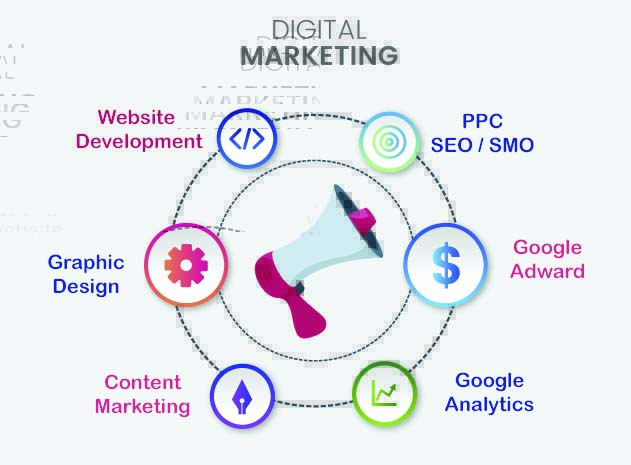
About MoreDigital marketing refers to the use of digital channels, such as websites, search engines, social media, email, and mobile apps, to promote products or services.
Read MoreEmail marketing is a digital marketing strategy that involves sending commercial messages to a group of people via email.
Read MoreSEO is the process of optimizing a website or online content to improve its visibility and ranking in search engine results pages.
Read MoreWebsite designing involves creating and designing the visual layout, structure, and user experience of a website.
Read MoreContent marketing is a strategic marketing approach focused on creating and consistent content to attract and engage a target audience.
Read MorePPC advertising is commonly used for driving traffic to websites, generating leads, and increasing sales and conversions.
Read MoreSocial media marketing involves using social media platforms to connect with your audience to build your brand, increase sales,and drive website traffic.
Read MoreBranding is the process of creating a unique identity and image for a product, service, company, or individual in the minds of consumers.
Read MoreSEO (Search Engine Optimization) involves optimizing your website and content to improve its visibility and ranking in organic search engine results. It focuses on attracting unpaid traffic by targeting specific keywords and optimizing various on-page and off-page factors.
PPC (Pay-Per-Click) advertising, on the other hand, involves paying for ads to appear on search engine results pages (SERPs) or other websites. Advertisers bid on keywords, and they only pay when users click on their ads. PPC allows for more immediate results and precise targeting compared to SEO.
The success of digital marketing campaigns can be measured using various metrics depending on your goals. Common metrics include website traffic, conversions, click-through rates (CTR), conversion rates, engagement (likes, shares, comments), return on investment (ROI), and customer lifetime value (CLV). Analyzing these metrics can help you evaluate the effectiveness of your campaigns and make data-driven decisions for optimization.
The social media platforms you should focus on depend on your target audience, industry, and marketing goals. Popular platforms like Facebook, Instagram, Twitter, LinkedIn, and YouTube each have unique demographics and features that may be more suitable for certain businesses. Research your target audience to determine which platforms they use the most and tailor your strategy accordingly.
The frequency of posting on social media depends on factors such as your audience's preferences, the platform's algorithms, and your resources. Generally, consistency is key, but it's essential to find the right balance between staying active and overwhelming your audience with too much content. Experiment with different posting frequencies and times to see what works best for engagement and reach.